
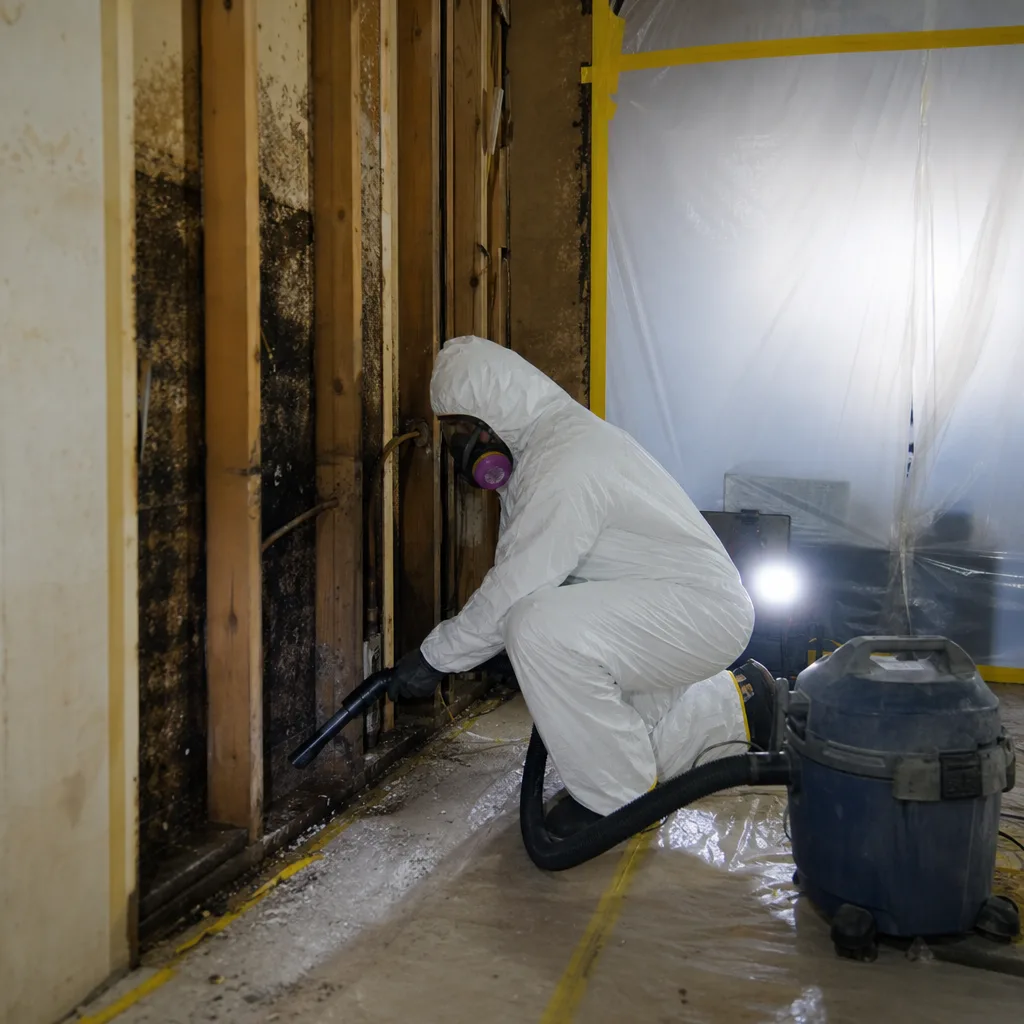
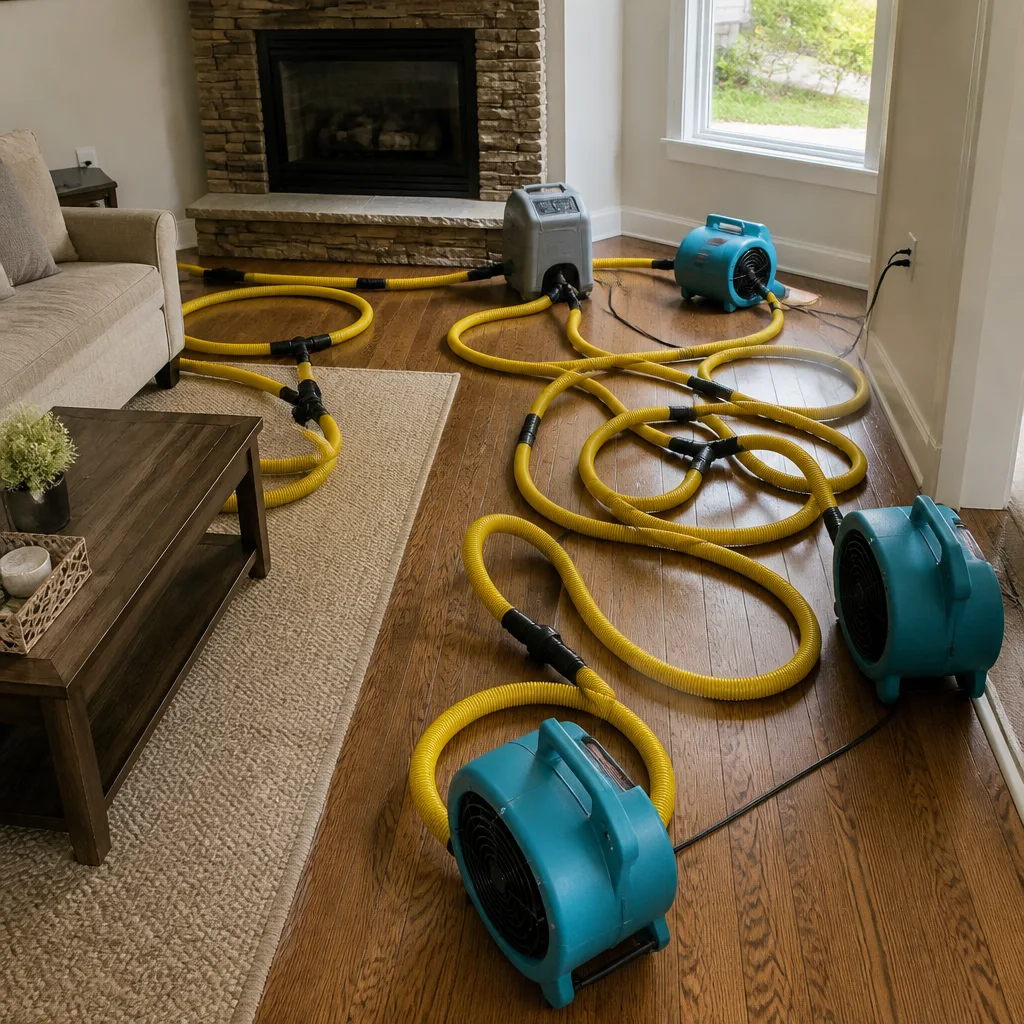
 Water damage drying
 Fire & smoke cleanup
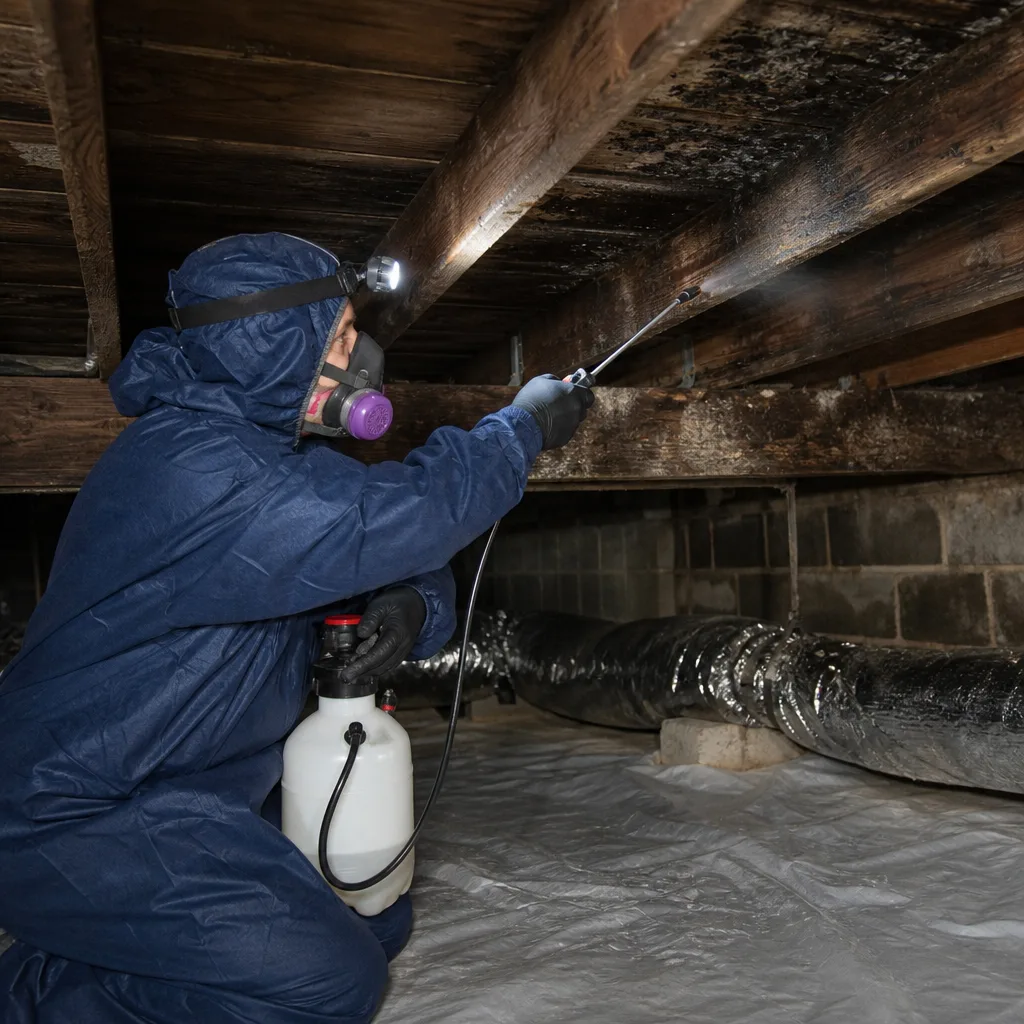
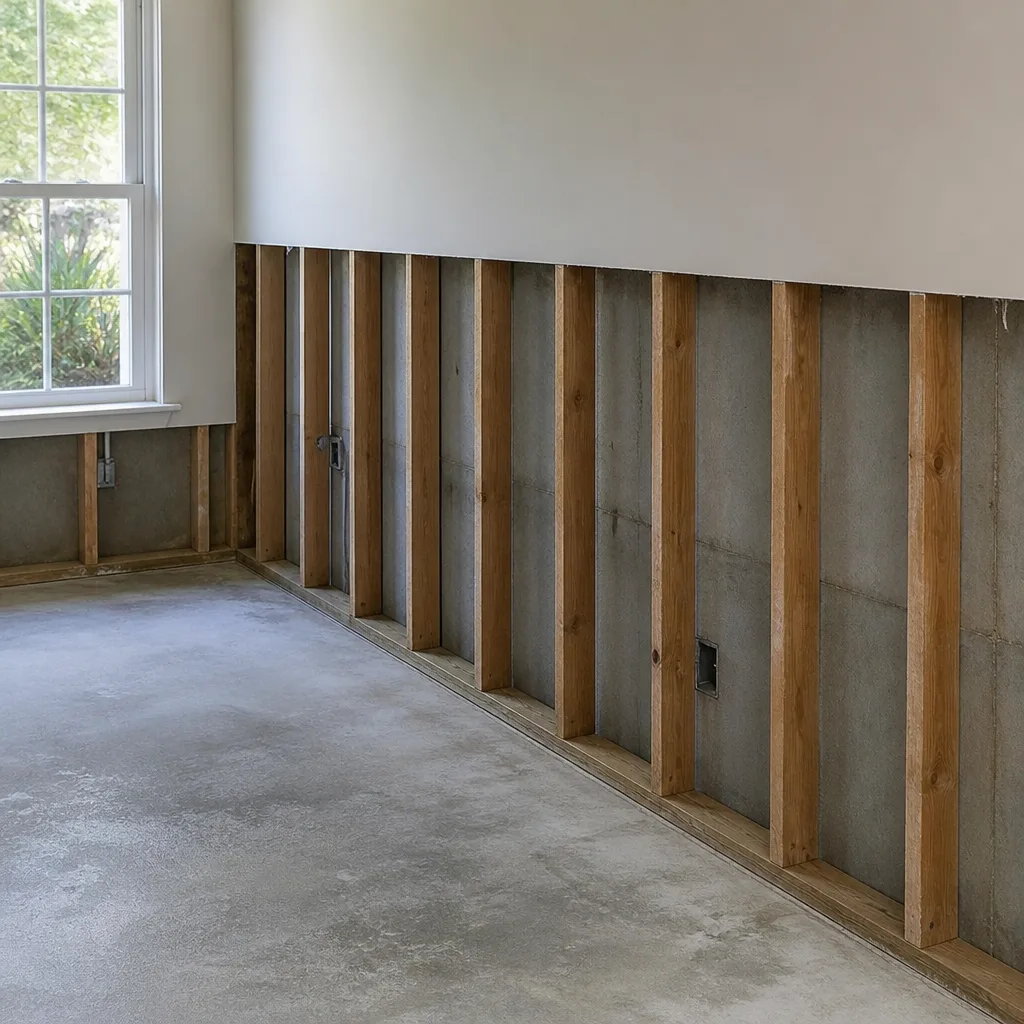 Mold remediation
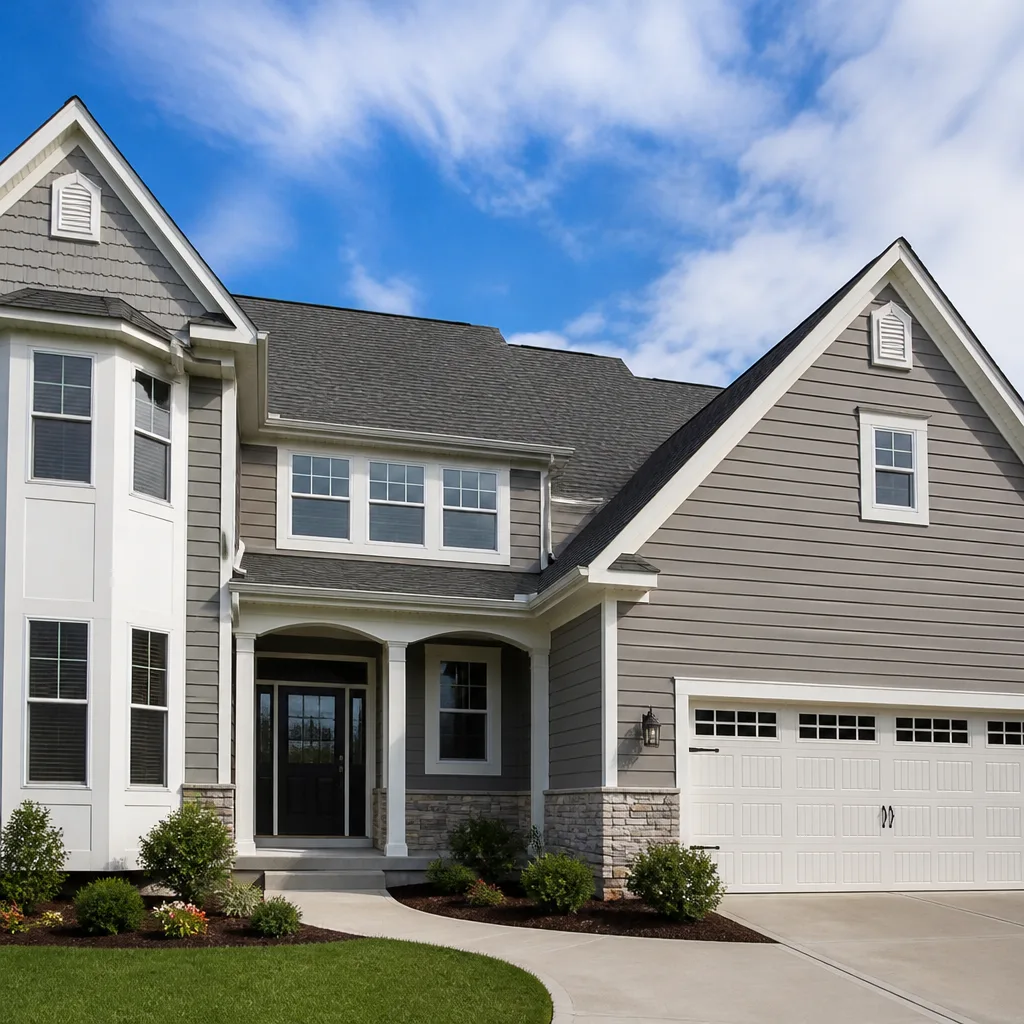 Storm response
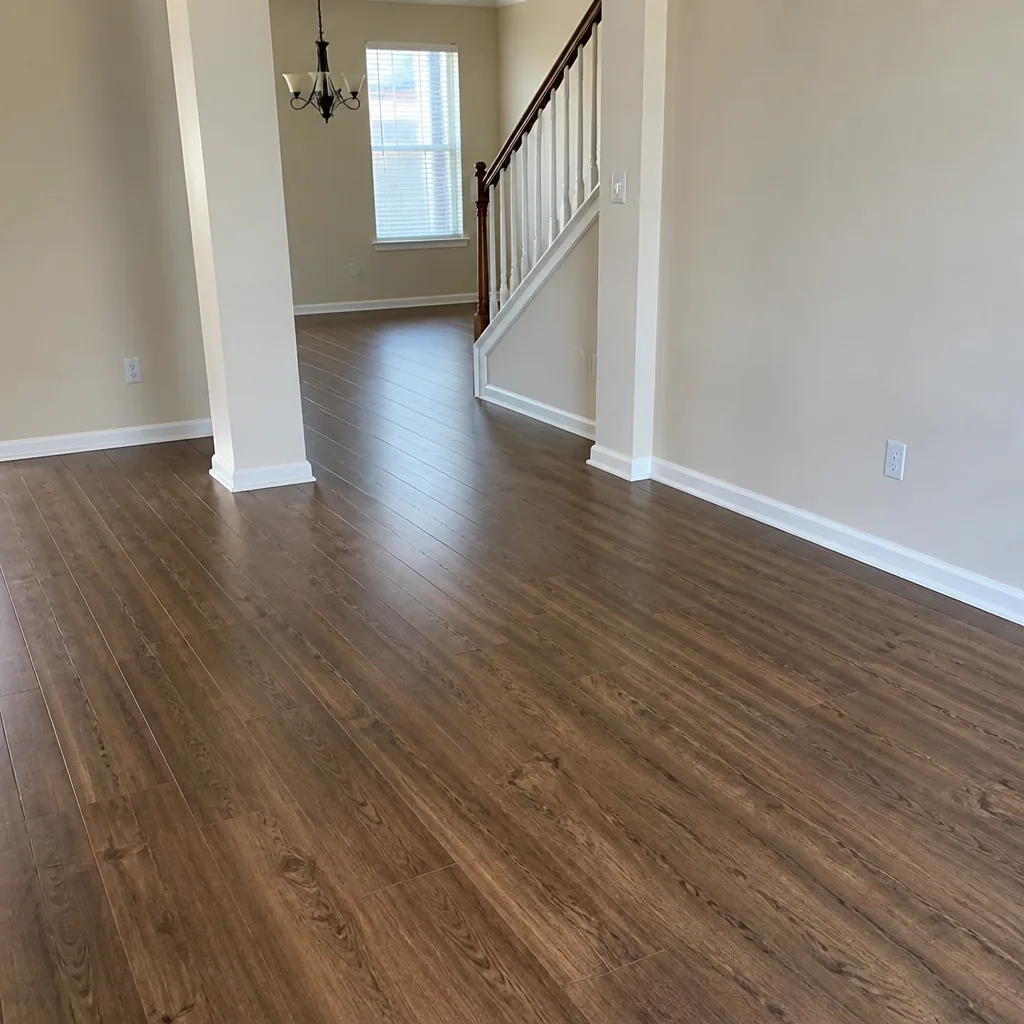 Sewage cleanup
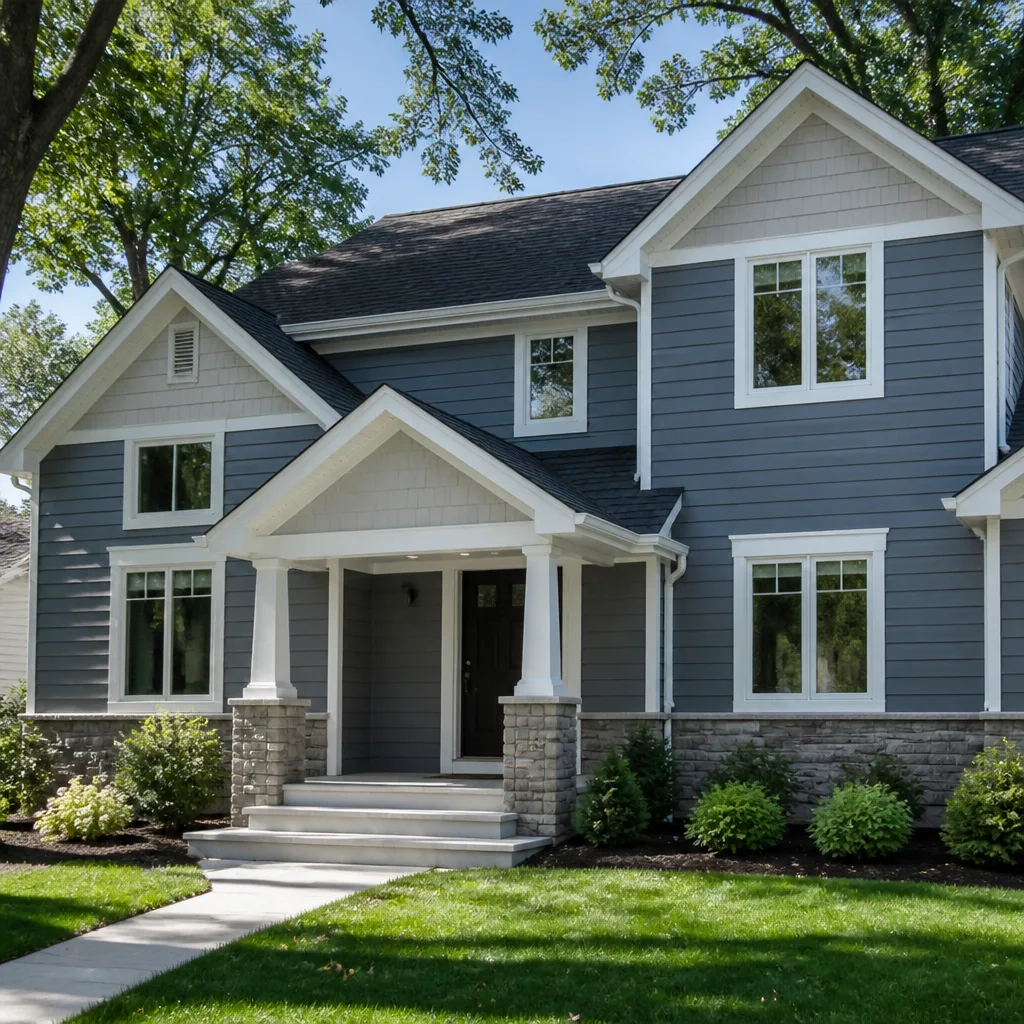 Reconstruction
Free visual inspection and a written scope of work before any mitigation begins - photos, moisture readings, and drying logs go in your claim file
The scope we write is the scope we bill. Anything new gets shown to you, in writing, before we touch it.
Get your free estimateFast, Reliable Mold Remediation Across Williston Park
Mold remediation in Williston Park usually costs between $1,800 and $6,500, depending on how far the moisture traveled and whether original plaster or oak flooring is involved. If you’ve spotted dark staining on a baseboard, noticed a musty smell in a closet, or had a supply line leak behind a wall, we can have a crew at your home in Williston Park within hours, not days. Call (607) 600-9946 and you’ll speak with a live person who can walk you through exactly what happens next, including a written price before any work starts.
Why Tidemark Water Damage Queens Is Williston Park’s Preferred Mold Remediation Company
We’re independently owned and operated as part of the Cedarwell Care Promise network, and our techs know Williston Park’s housing stock on a first-name basis. Most of the homes here were built between 1920 and 1950 with plaster and lath walls, original oak flooring, and wood framing that holds moisture differently than drywall and modern lumber. When a homeowner on Willis Avenue or Stratford Road calls us about mold, we already know to check behind picture rails, inside uninsulated wall cavities, and under original baseboards, because that’s where moisture hides in these Colonials and Craftsman homes.
Rick Sumner leads our crews, and he’s built a team that treats every Williston Park job like it’s happening in a neighbor’s home. Shoe covers go on at the door. Drop cloths cover the floors before the first piece of equipment comes inside. We share a photo of the clean-up before we leave, so you can see exactly what was done and how we left it. And because we answer calls 24/7, you’re never routed through a voicemail queue when a supply line lets loose at 2 a.m.
Our technicians carry IICRC, RIA, and IFA credentials, and they run Dri-Eaz dehumidifiers and B-Air air movers, the same professional-grade equipment used by leading restoration specialists. But the real difference in Williston Park comes down to experience with the homes themselves. We’ve measured wall cavity moisture readings above 35% in 1930s Colonials while newer homes half a mile away dry in a quarter of the time. That kind of local knowledge isn’t something you can train for in a seminar. You learn it by doing the work, block by block.
Restoration work we handle
Mold Removal Specialist in Williston Park
A Mold Removal Specialist in Williston Park handles the full scope of the job: identifying the moisture source, containing the affected area, removing contaminated materials, treating surfaces, and drying past the tide mark so the mold doesn’t return. In these older homes, that often means working behind original plaster and lath walls, under oak flooring, and inside cavities that haven’t been opened since the house was built.
Moisture Mapping and Containment
Before any wall is opened, we map the moisture. A tide mark is the line water leaves on a wall, and it’s the first thing our techs look for on every job. In Williston Park, where uninsulated plaster walls hold humidity for weeks, visual inspection alone is not enough. We take readings throughout the affected area and set up containment so spores don’t spread through the plaster dust. That’s a critical difference. Missing containment here means mold gets pulled through original wall cavities and into rooms that were never affected.
Like-for-Like Restoration
Williston Park’s building department prefers like-for-like repairs on original materials. That means we don’t default to ripping out oak flooring or gutting plaster walls. We treat the lath, dry the subfloor, and restore what’s salvageable. It’s slower than demolition, but it keeps the character of the house intact and often costs less than full replacement. A typical Mold Removal Specialist job in a Williston Park Colonial runs between $2,500 and $5,800, depending on square footage and how many rooms are affected.
Black Mold Removal in Williston Park
Black Mold Removal in Williston Park addresses the specific strain homeowners most often ask about: Stachybotrys chartarum, which thrives on water-damaged cellulose like the wood lath, subflooring, and original trim common in 1920s and 1930s homes. It needs sustained moisture to grow, and in a home without modern vapor barriers, a category 2 supply line leak can feed it for weeks before anyone sees or smells anything.
When Black Mold Requires Special Handling
When our techs find black mold behind original baseboards or under oak flooring, the containment protocol tightens. We use full poly sheeting, negative air pressure, and HEPA filtration. The goal is to isolate the affected area completely, because black mold spores settle into the same plaster dust and wood fibers that make these homes beautiful. A Williston Park Black Mold Removal job typically runs $3,200 to $6,500, with the higher end reflecting cases where multiple rooms or finished basement spaces are involved.
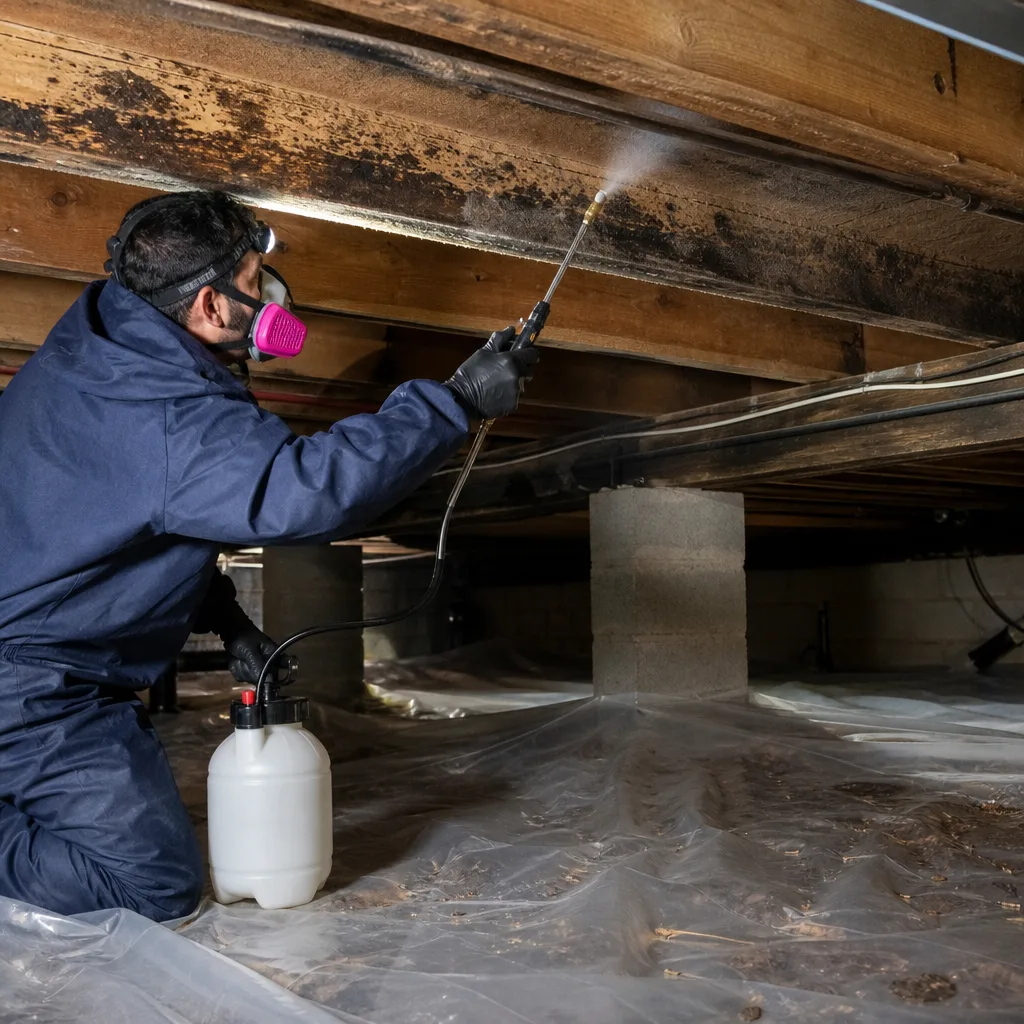
Testing and Clearance
Before we break down containment, we verify the space is dry and the air is clean. That means confirmation readings on wall cavities and subfloors, not just a visual check. In a 1931 Craftsman on Wellington Road, our techs found elevated moisture behind a picture rail that no one would have caught without a moisture meter. That wall cavity gets treated and dried before we close anything up. We don’t leave Williston Park homes with dormant mold waiting for the next humid summer.
Trusted Brands We Service in Williston Park
We work with the equipment and standards homeowners in Williston Park recognize and trust. Our techs run Dri-Eaz dehumidifiers and B-Air air movers, and our IICRC, RIA, and IFA credentials mean the work meets the restoration industry’s benchmark for mold remediation. Because we stock the drying equipment and containment materials on our trucks, we don’t lose a day waiting on parts when a Williston Park job opens up. The equipment arrives with the crew, and the crew arrives with a written scope ready for your review. For homeowners on Hillside Avenue or Broad Street, that means less time living with equipment running and more time back to normal.
See the difference
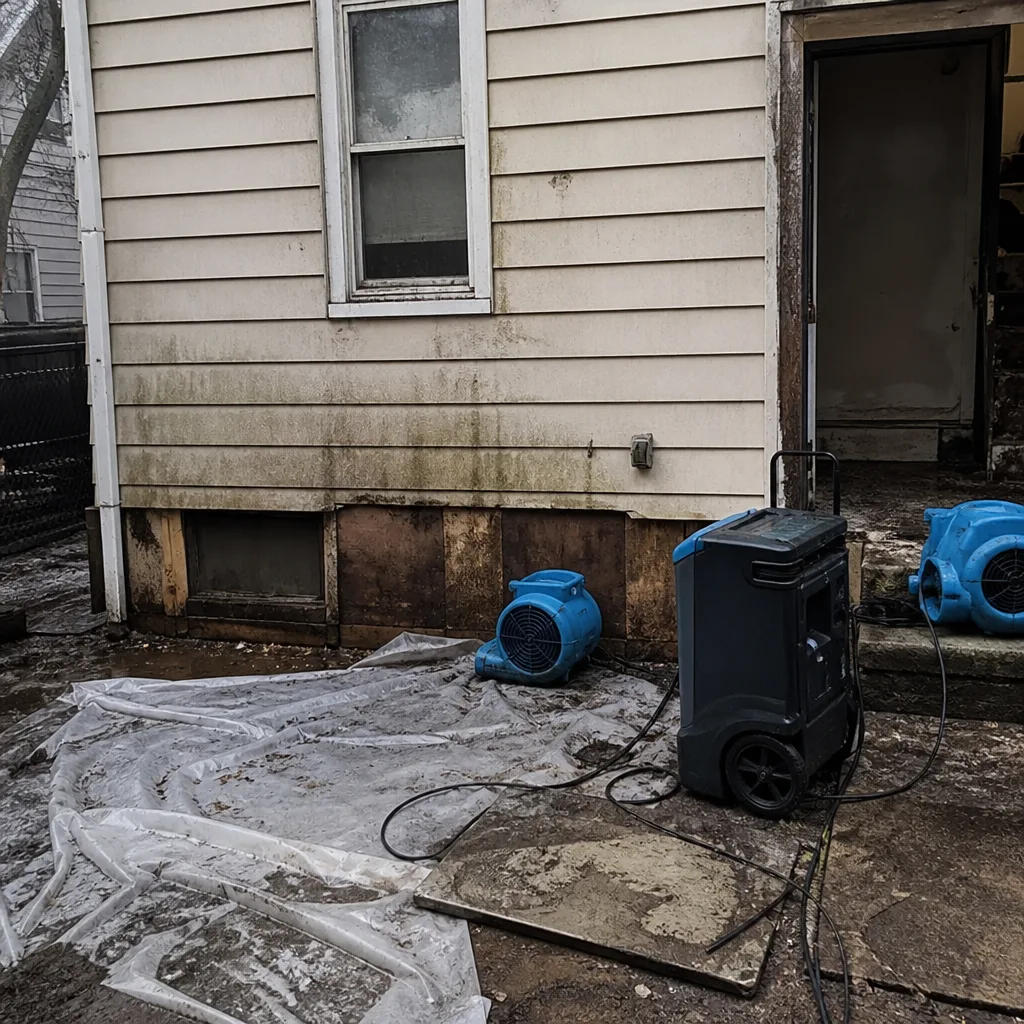 Before
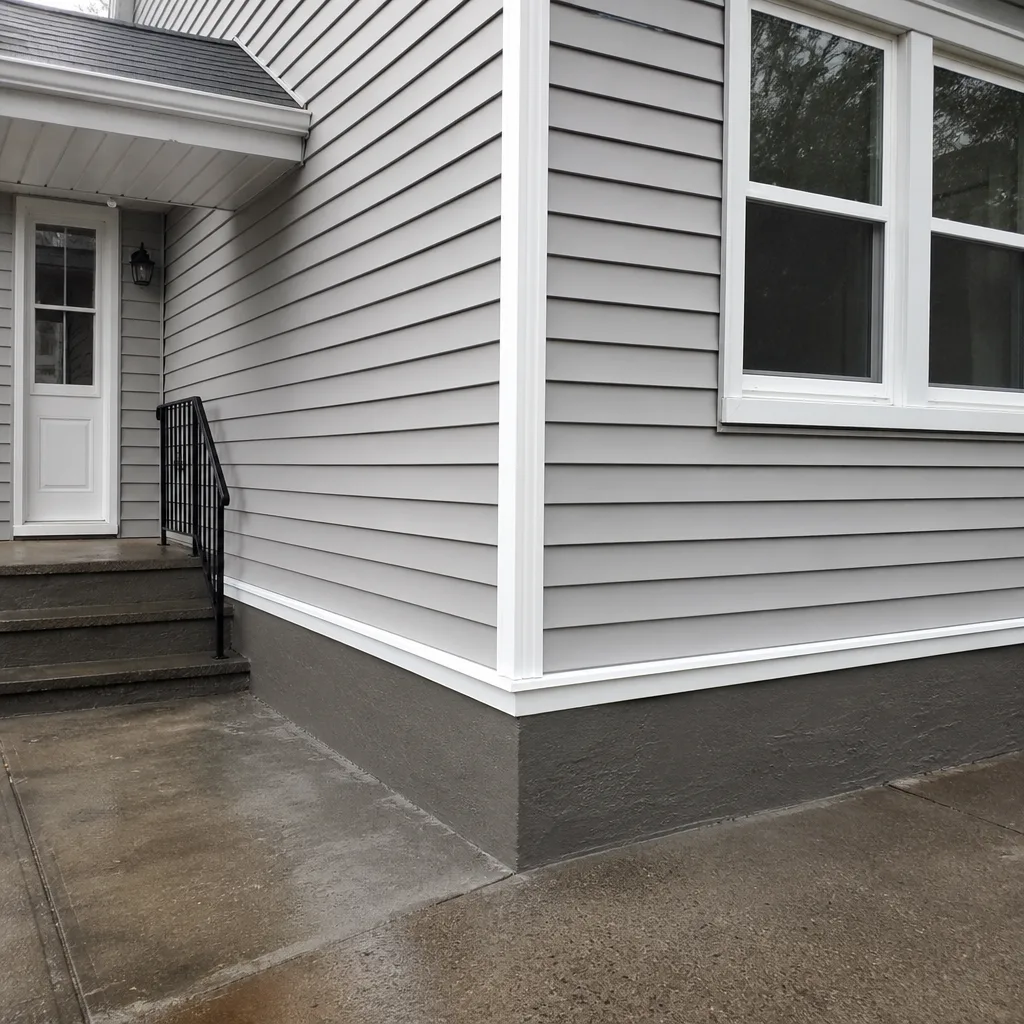 After
After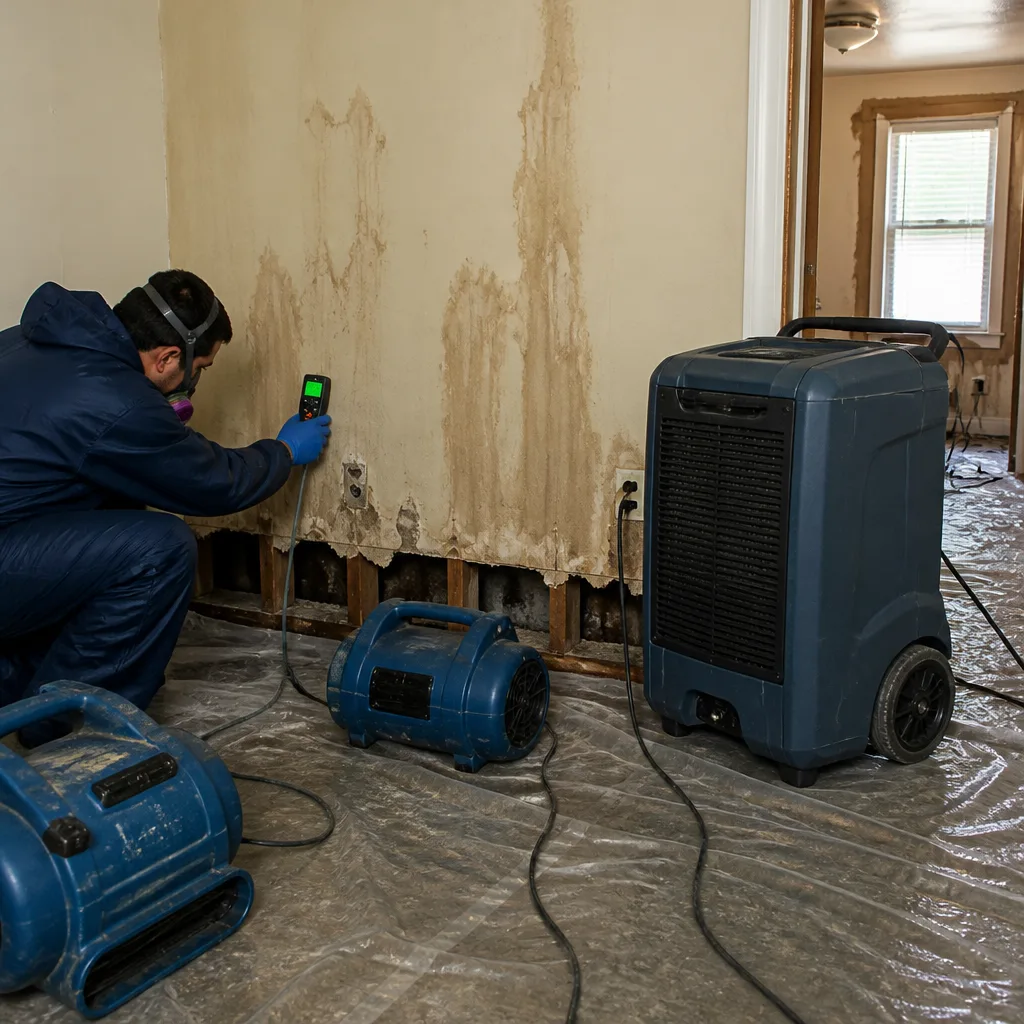 Before
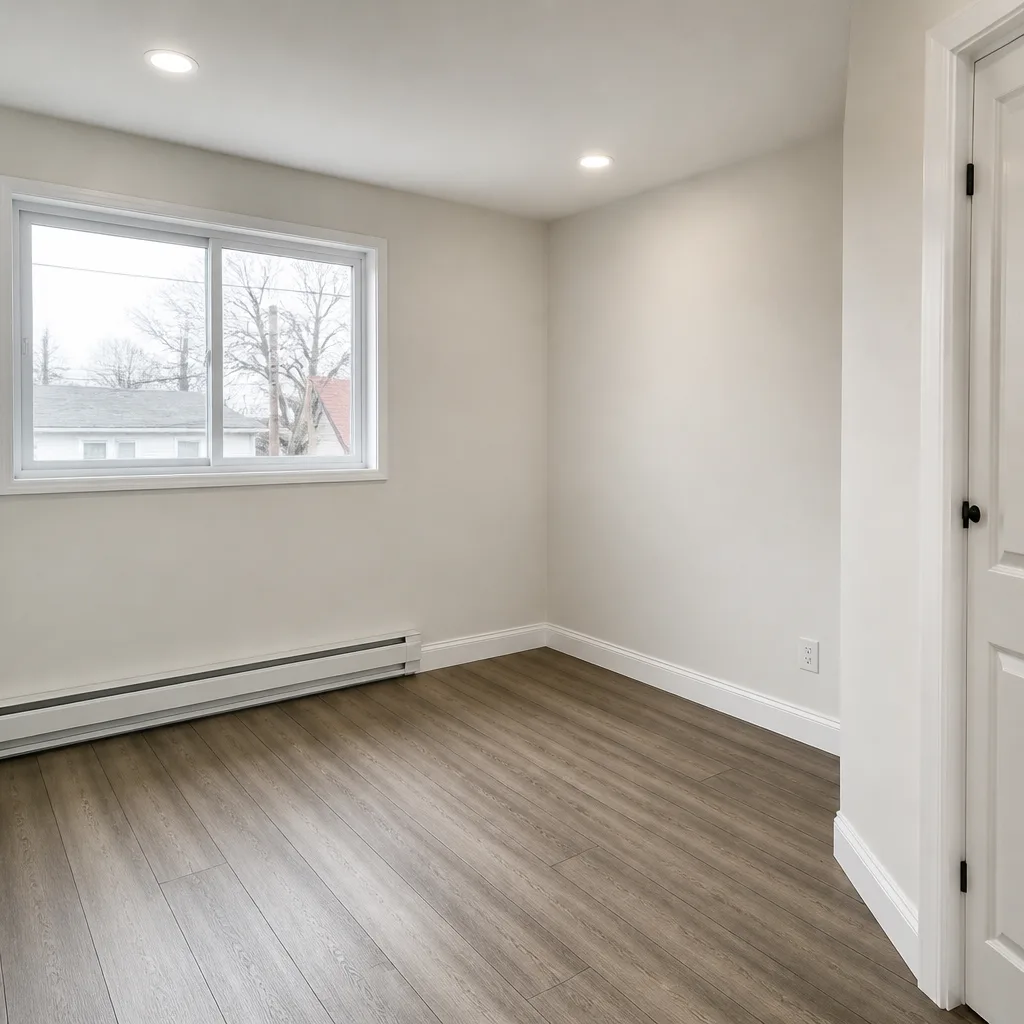 After
After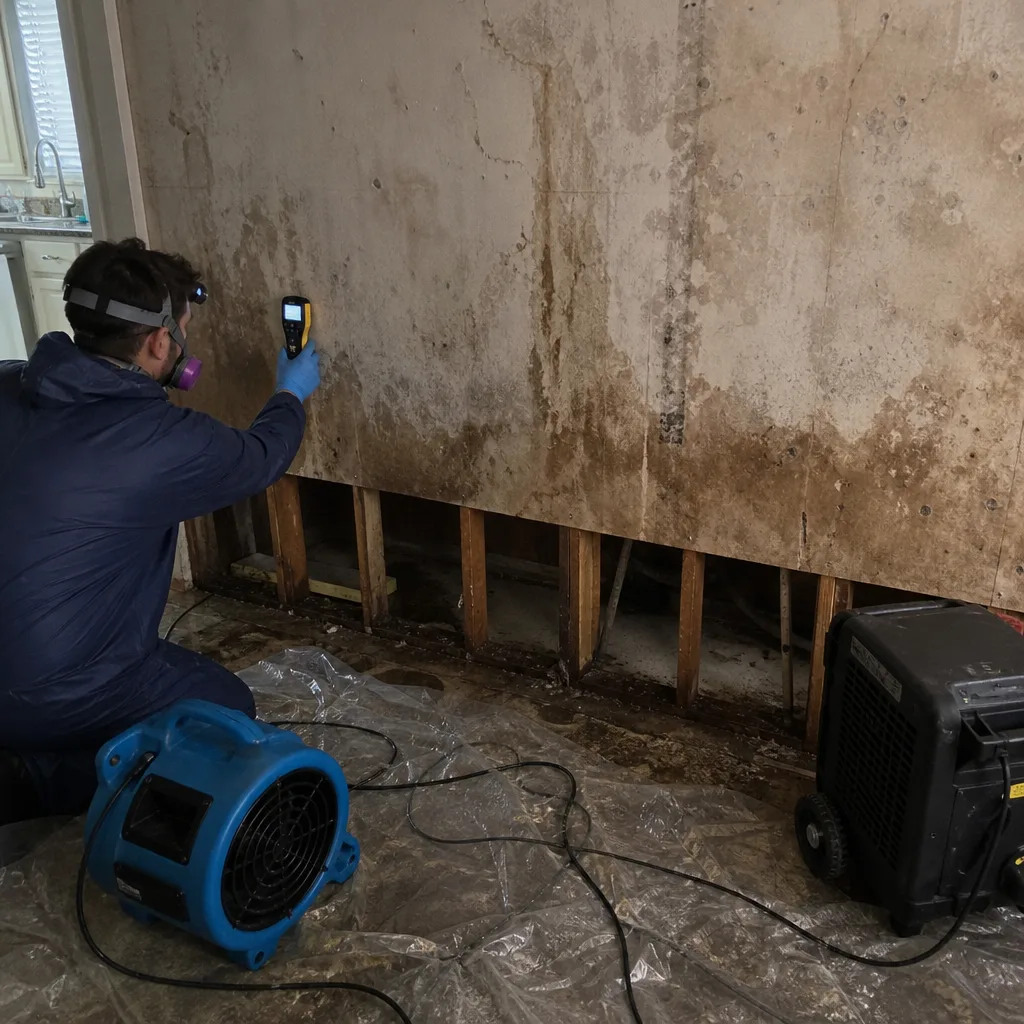 Before
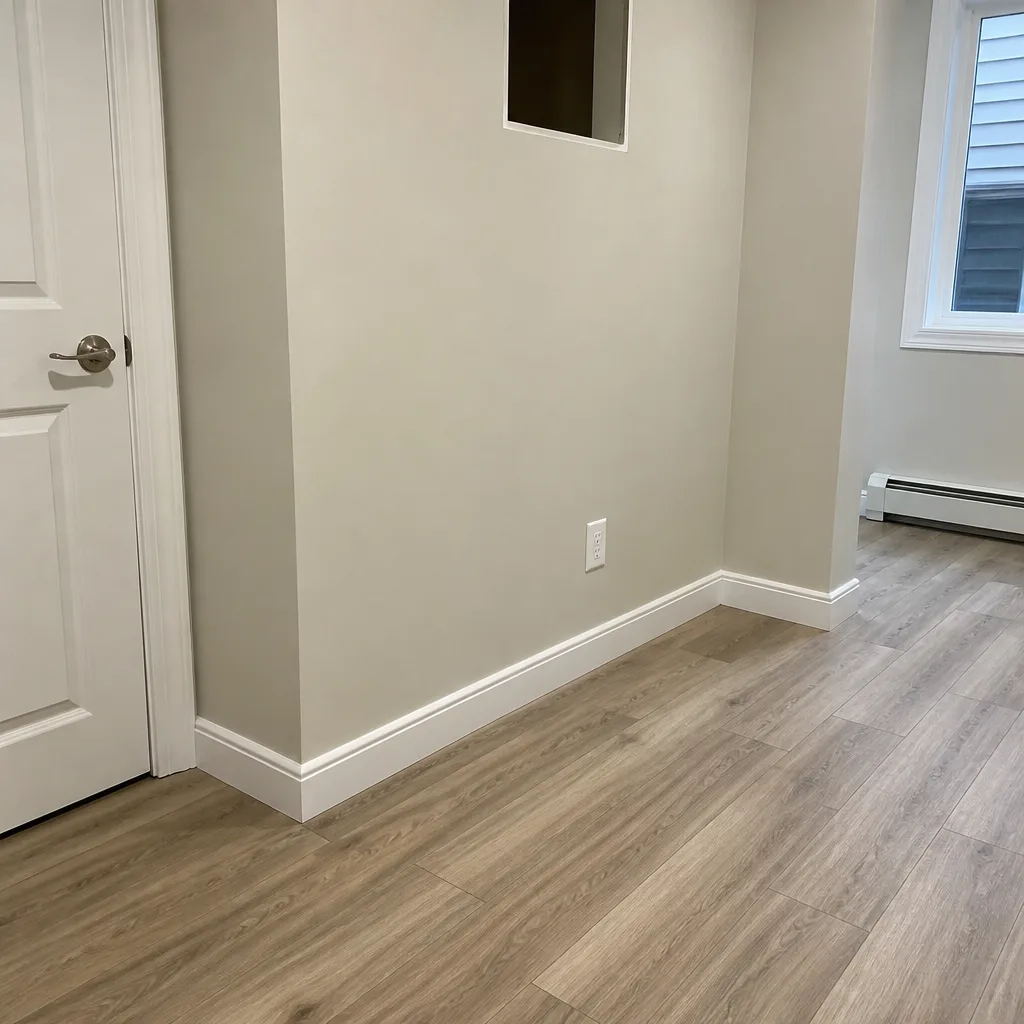 After
AfterCommon Mold Remediation Problems We See in Williston Park Homes
- Hidden mold behind plaster and lath. The pre-1940 Colonials and Craftsman homes in Williston Park have uninsulated wall cavities that hold moisture readings above 20% for weeks after a category 2 leak. Mold grows behind the original baseboards and picture rails long before it’s visible on the surface.
- Spread during improper cleanup. We regularly get called in after another company started remediation without full containment. Spores get pulled through original plaster dust and settle on oak flooring, trim, and upholstery, turning a one-room job into a whole-house pack-out.
- Demolition-first approaches. Some contractors see original plaster and oak floors as a teardown opportunity. Williston Park’s building department prefers like-for-like repair, and homeowners usually prefer it too. Treating the lath and drying the subfloor preserves the house’s character and saves money.
- Basement humidity that never resolves. Williston Park sits on Long Island with humid summers and nor’easter seasons. Basements without sump pumps stay damp, and mold re-establishes quickly if the drying phase ends too early. We run equipment until cavity readings confirm pre-loss conditions, not until the visible surface looks dry.
Pricing for Mold Remediation in Williston Park, NY
| Service | Typical Range in Williston Park |
|---|---|
| Mold Removal Specialist | $2,500 – $5,800 |
| Black Mold Removal | $3,200 – $6,500 |
Several things move the number within these ranges: how many rooms are affected, whether original plaster and oak flooring are involved, how high the moisture readings are behind wall cavities, and how long the leak has been active. A small containment in a 1930s Colonial with a recent leak will land at the lower end. A multi-room Black Mold Removal where a supply line ran for weeks will land higher. What you won’t get is a surprise. Every job in Williston Park receives a written price before any work starts, every time, with no exceptions. If the restoration isn’t done right, our 365-Day Done Right Promise means we make it right. Call (607) 600-9946 for a free estimate with a specific number, not a vague range.
We Also Serve Cities Near Williston Park
While this page focuses on Williston Park, our crews regularly handle Mold Remediation in the surrounding communities. We serve Williston Park and the neighboring villages of Albertson, Roslyn Heights, New Hyde Park, and Manhasset, bringing the same written price first, pet-safe products, and 365-Day Done Right Promise to every job.
Serving Williston Park, NY - Our Local Coverage Area
We’re based in the Williston Park area and know this community well. Use the map below to see our service coverage - if you’re nearby, we can almost certainly help.
FAQs About Mold Remediation in Williston Park
Within 24 to 48 hours, mold spores can germinate and start colonizing the wood lath and plaster behind your walls. In a 1930s Colonial without modern vapor barriers, the cavity stays damp for weeks, which means mold keeps growing long after the visible leak stops. If you’ve had a supply line leak on William Street or Willis Avenue in the last few days, don’t wait for visible staining to appear. Call (607) 600-9946 and we’ll take moisture readings before the mold gets established.
A Mold Removal Specialist handles all types of mold and the full scope of remediation: containment, removal, treatment, and drying. Black Mold Removal specifically addresses Stachybotrys and similarly toxic strains that require tighter containment protocols and more aggressive air filtration. If you’re not sure which you’re dealing with, we can identify it during the initial inspection. Most Williston Park homeowners don’t know the strain until testing confirms it. That’s fine. The process starts the same way, and we explain what you’re looking at before we ask you to spend anything.
Williston Park’s building department prefers like-for-like repairs whenever original materials are salvageable. That matches how we work in these 1920s and 1930s homes by default: treat the lath, dry the subfloor, and restore the plaster rather than gutting walls and replacing oak with modern materials. It keeps the character of the house, satisfies the local preference, and often costs less than full replacement. If materials are too far gone, we’ll tell you straight and show you why.
Yes, with care. Our techs work around original knob-and-tube and early romex wiring when we open and restore plaster walls. We do not run high-amperage drying equipment on circuits that cannot handle it, and we verify what’s behind a wall before cutting into it. Original wiring adds a step to the job, but it rarely changes the approach. We contain the area, treat the visible mold, and dry the cavity using equipment sized for the home’s electrical capacity. A 1931 Craftsman on Wellington Road is a perfect example of work we’ve done without disturbing the original systems.
Before we set up containment, we ask you which pieces matter most. We move and cover antiques with care, and if anything needs to be removed from the affected area, we document it with photos and move it to a safe room. In a 1928 Colonial on William Street, our techs protected original oak furniture in the dining room while remediating the plaster wall and subfloor beneath it. Nothing was packed out unnecessarily, and the homeowner kept every piece. We ask before we move or touch anything. That’s not a courtesy; it’s how we work.
Written by Rick Sumner, Owner at Tidemark Water Damage Queens, serving Williston Park and surrounding communities with mold remediation, water damage restoration, and fire damage restoration.