
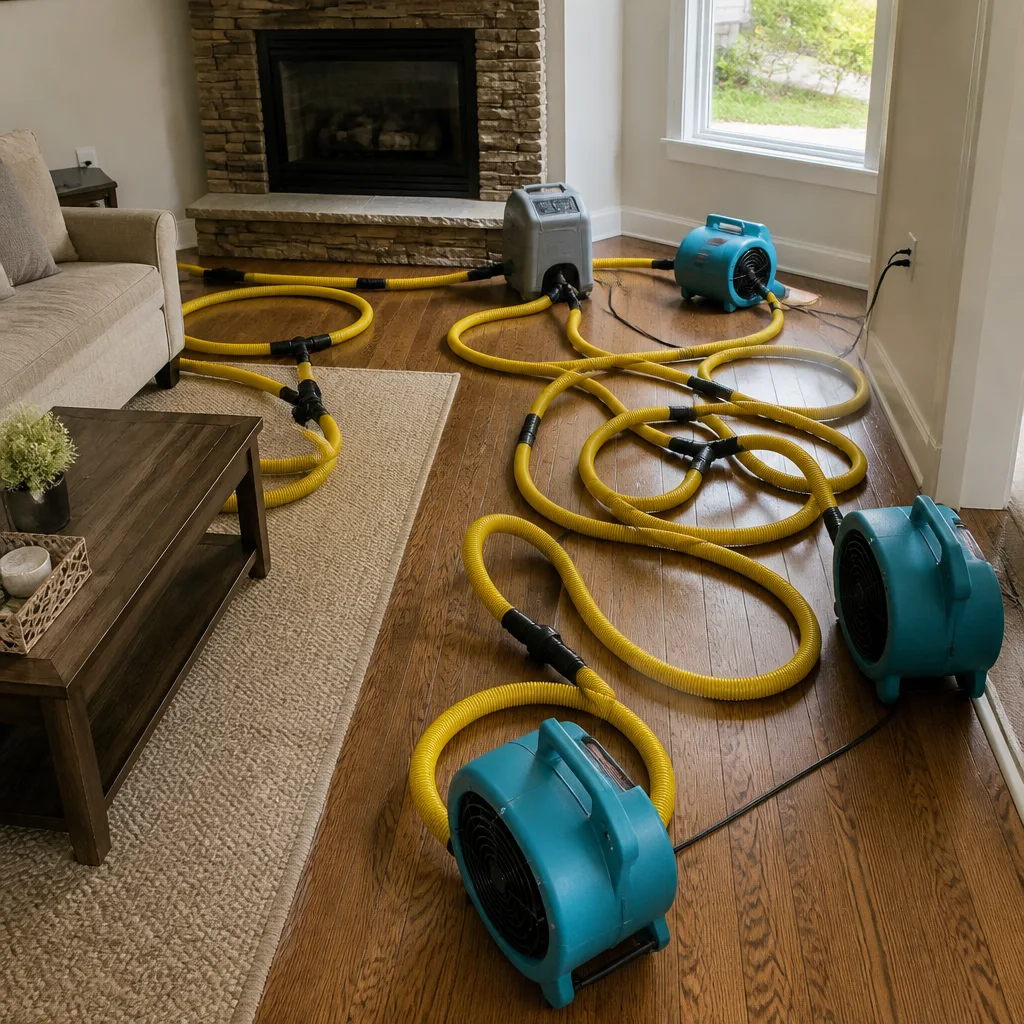
 Water damage drying
 Fire & smoke cleanup
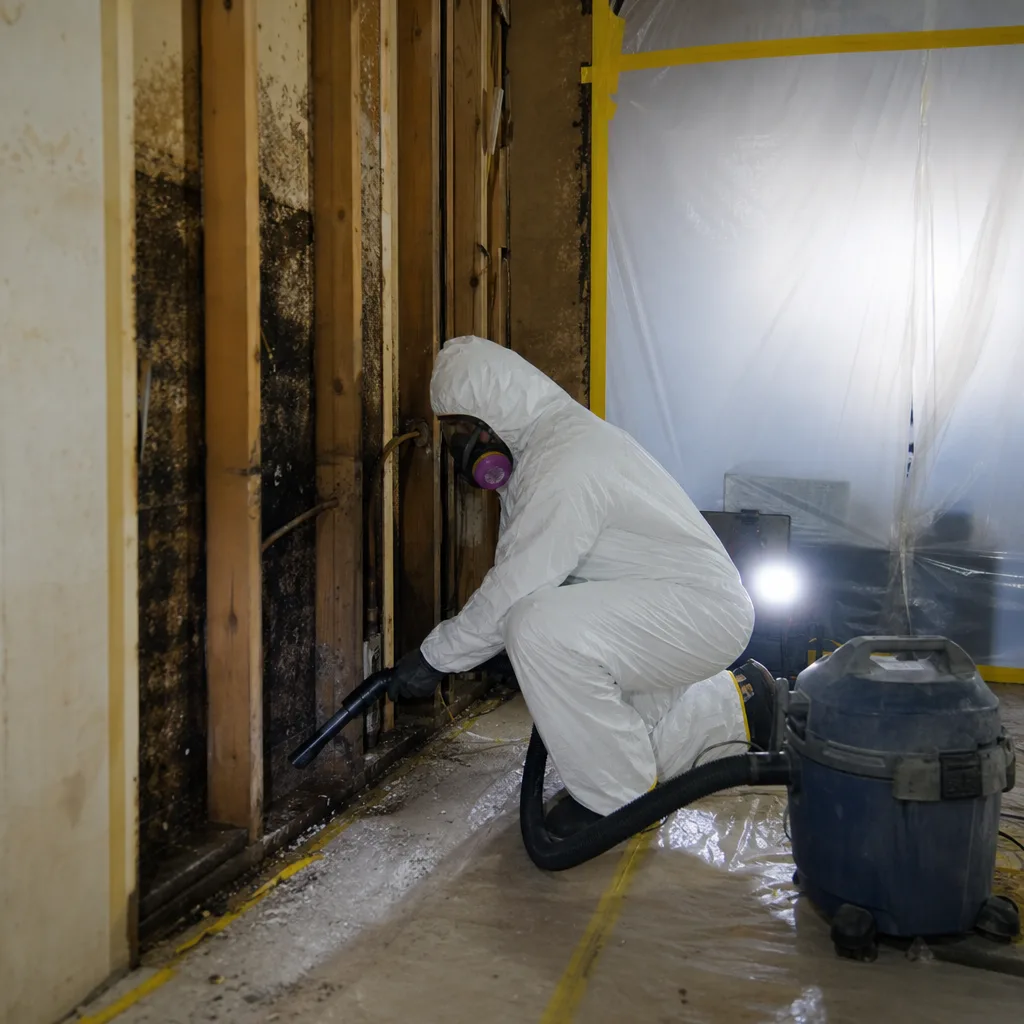
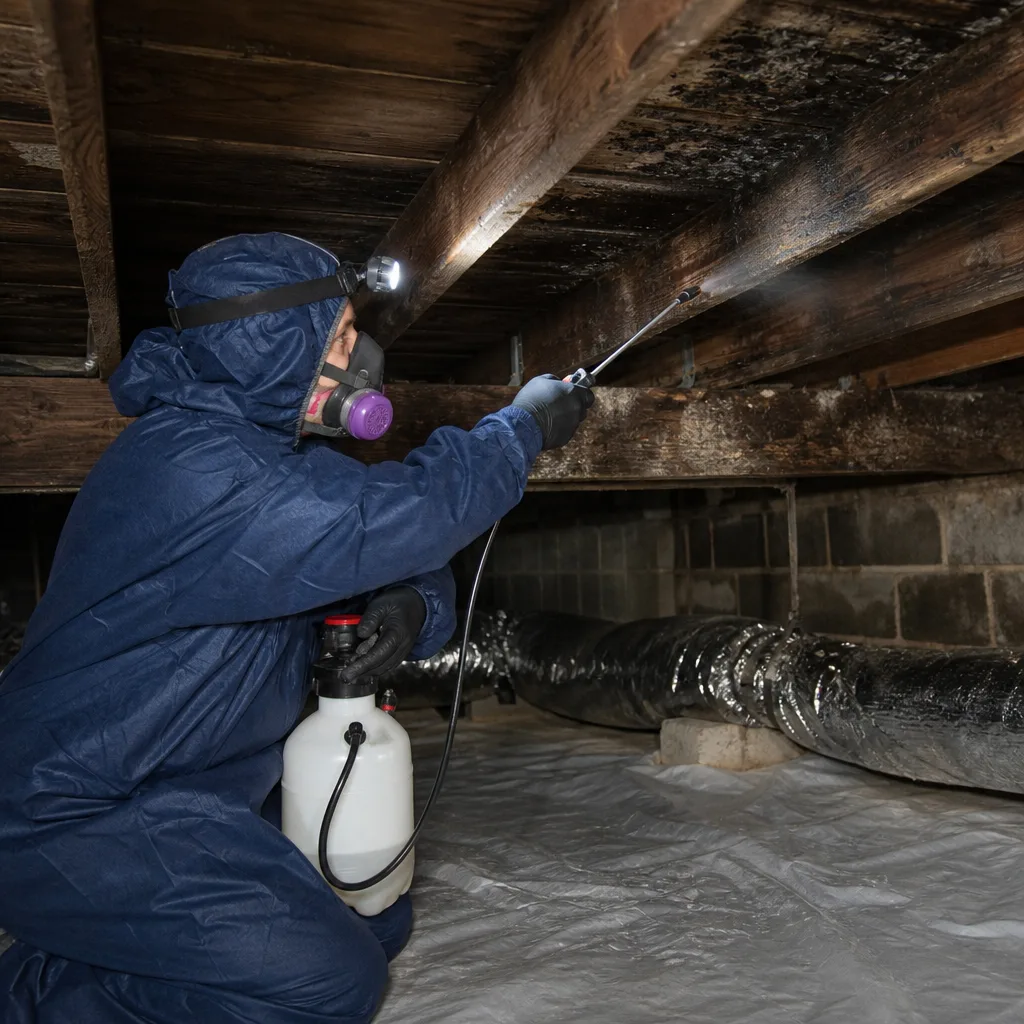
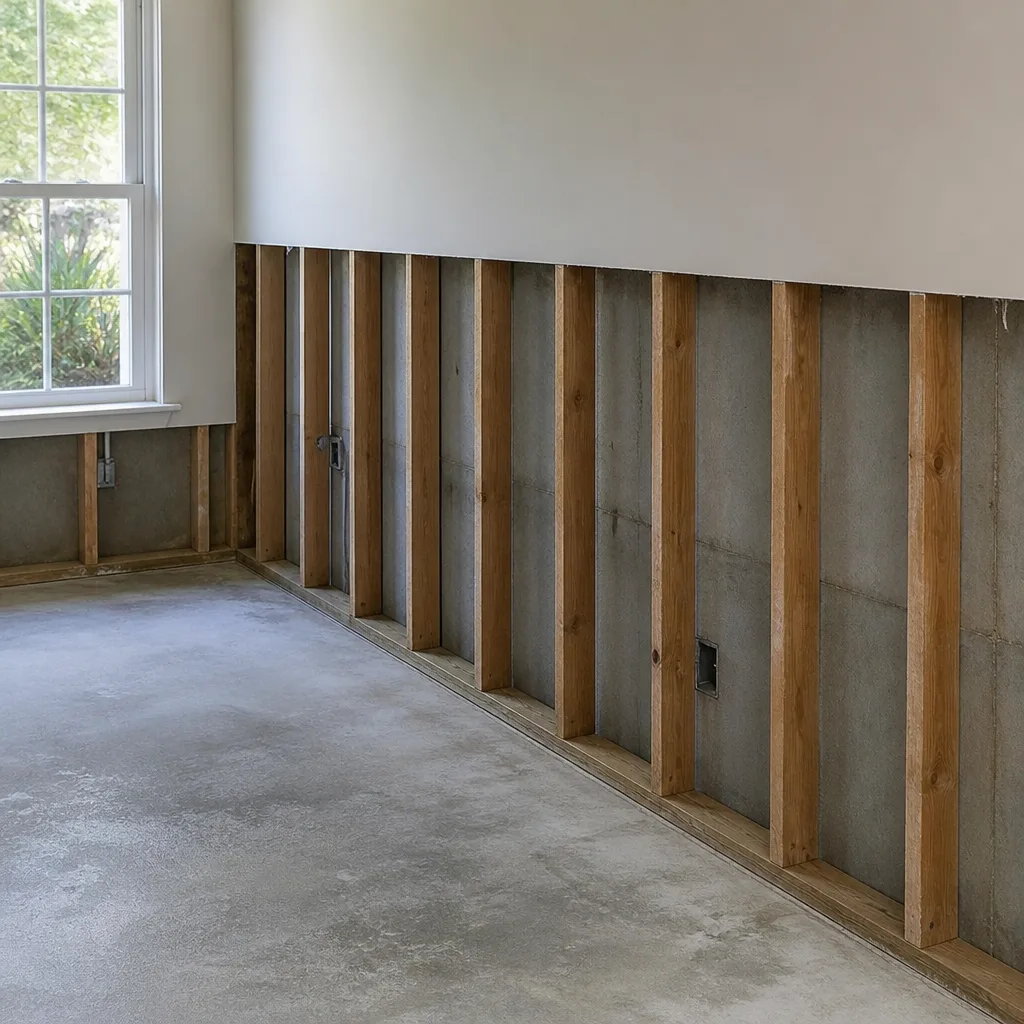 Mold remediation
 Storm response
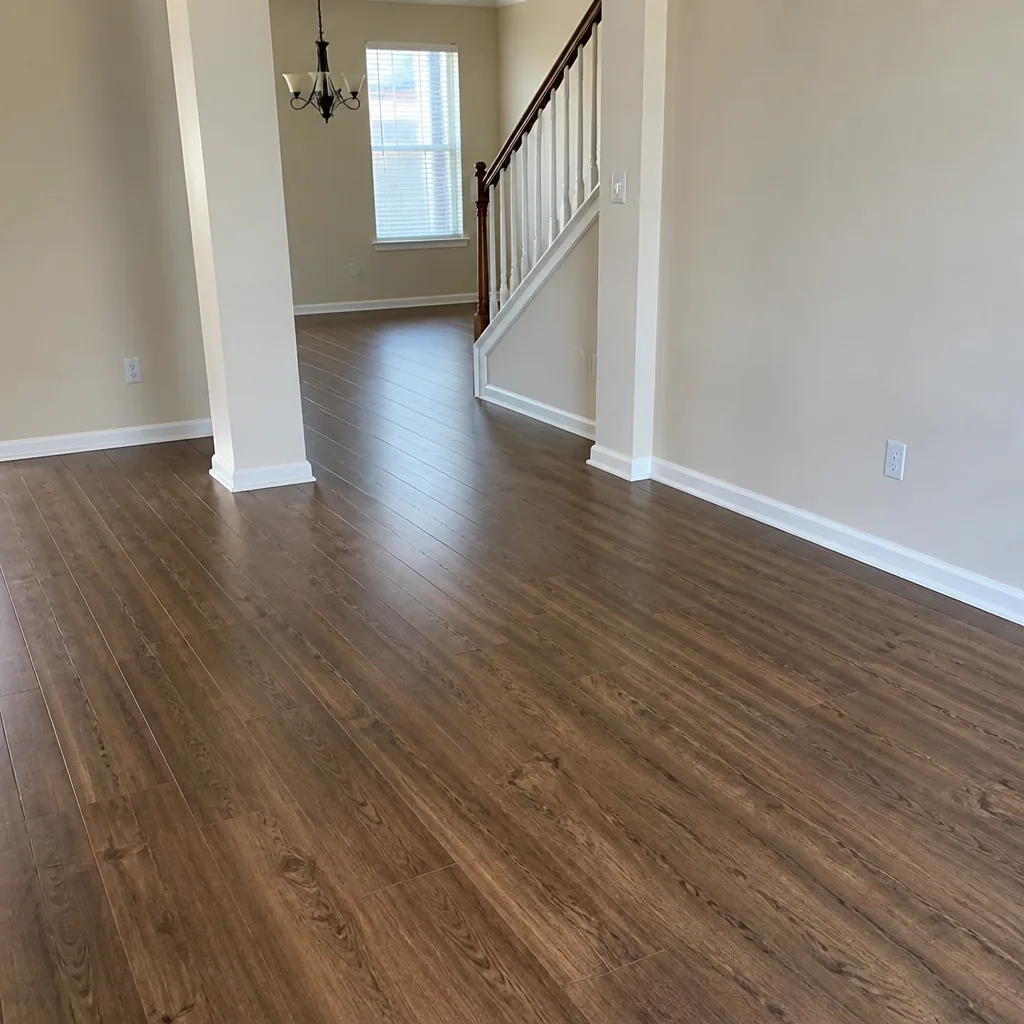 Sewage cleanup
 Reconstruction
Free visual inspection and a written scope of work before any mitigation begins - photos, moisture readings, and drying logs go in your claim file
The scope we write is the scope we bill. Anything new gets shown to you, in writing, before we touch it.
Get your free estimateFast, Reliable Mold Remediation Across New York
Mold remediation in New York typically costs between $1,800 and $6,500 for a standard basement or single-room project, with most jobs completed in two to four days. Here’s what actually matters: a sewer backup in a Lower East Side brownstone or a nor’easter flood in the Rockaways won’t wait for a callback. Our crews serve New York from a metro dispatch office, and a live person answers the phone at (607) 600-9946, day or night, so you can describe what you’re seeing and get a straight answer about next steps.
We know the difference between mold from a slow pipe leak behind a prewar plaster wall and mold blooming 48 hours after stormwater pushed through a basement window. The first needs moisture mapping and targeted drying. The second needs full containment, fast. New York’s specific building realities – shared walls, wood joists under plaster, basements below street level – shape every decision we make on a job.
Why Tidemark Water Damage Queens Is New York’s Preferred Mold Remediation Company
Most restoration companies in New York chase the visible damage. Our Mold Remediation team starts differently: we find the tide mark. That’s the line water leaves on a wall, and it tells us exactly where moisture traveled, not just where it pooled. Rick Sumner leads our technicians, and he drills one habit into every crew member: explain the price before the work, protect the floors before the equipment comes in, and leave the space cleaner than you found it.
New York homeowners tell us the same thing again and again. They’ve had contractors show up late, track debris through the living room, and hand over an invoice that looks nothing like the estimate. We don’t work that way. Shoe covers go on at the door. Drop cloths cover the floor before the first piece of equipment comes in. You get a written price before any work starts, and that’s the number you pay. No add-ons, no surprises.
Our technicians are background-checked, uniformed, and credentialed through IICRC, RIA, and IFA. They run professional-grade equipment from Dri-Eaz and Injectidry, the same machines used by leading restoration specialists. But the credential that matters most in New York is plain experience: we’ve worked in co-ops in the Bronx, walk-ups in Queens, brownstones in Brooklyn, and high-rise units where the board needs documentation before the crew even parks. We know how to handle that paperwork, and we’re happy to.
Restoration work we handle
Mold Removal Service in New York
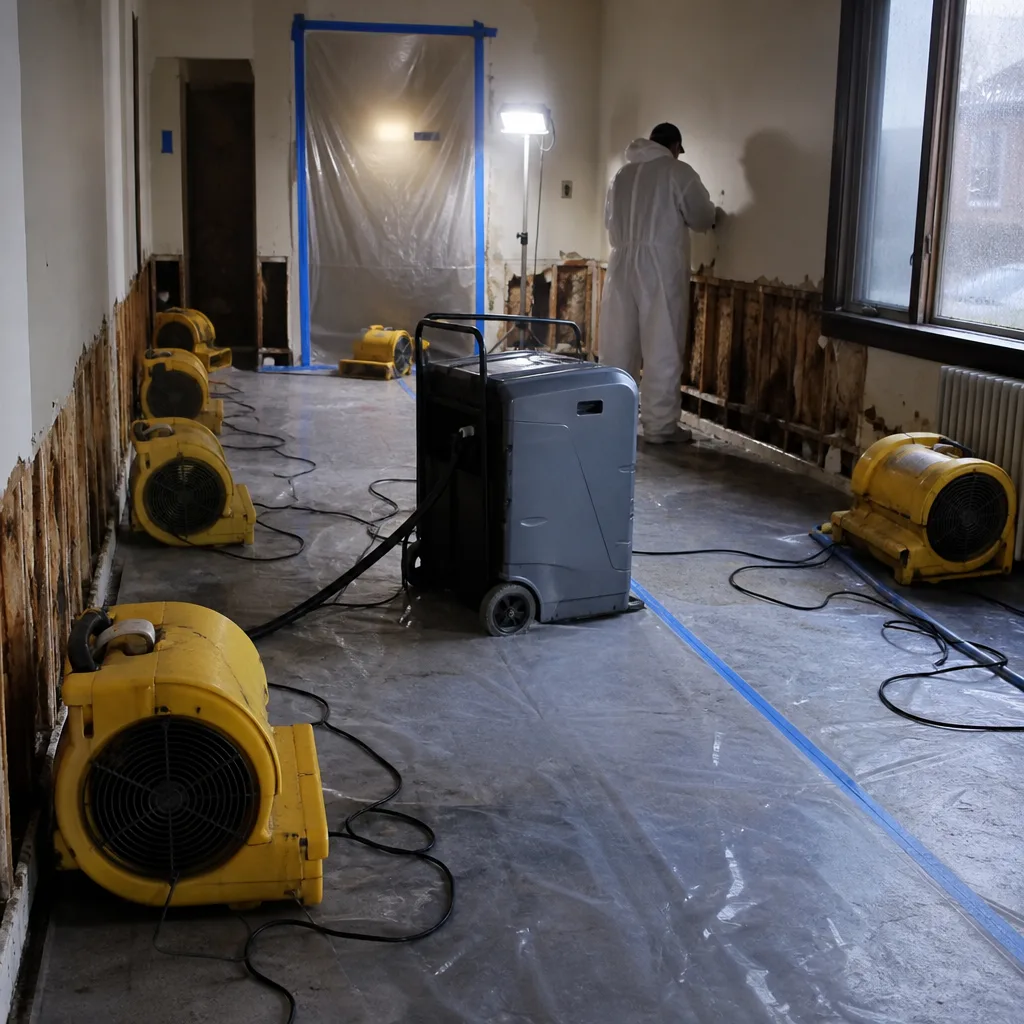
Mold Removal Service in New York means something specific: physically removing contaminated material, not just spraying it. When a prewar building’s plaster wall has absorbed Category 3 water from a combined sewer backup, the mold isn’t sitting on the surface. It’s inside the plaster, on the wood lath behind it, and probably in the joist cavities above. Surface cleaning won’t touch it. Our crews remove the affected material, contain the area so spores don’t migrate through shared walls, and dry the structure past the tide mark.
Containment Before Removal
In attached New York buildings, airborne mold spores don’t respect property lines. We set up full containment with negative air pressure before any material is disturbed. This matters especially in brownstones and tenements where neighbors share a wall. A containment failure isn’t just an inconvenience. It’s a co-op board complaint, a legal exposure, and a health concern for the family next door.
Material Removal and Structural Drying
Plaster walls, wood lath, and old-growth joists dry differently than drywall. Our technicians use moisture mapping to confirm readings drop below 15% before we consider the job done. We remove drywall, plaster, insulation, and any material that can’t be salvaged, then run Dri-Eaz dehumidifiers and air movers until the structure is stable. Most Mold Removal Service jobs in New York run $1,800 to $6,500 depending on square footage and how far the water traveled.
Mold Remediation Services in New York
Mold Remediation Services in New York go beyond removal. We address the moisture source, the air quality in the surrounding rooms, and the conditions that let mold grow in the first place. After any heavy rain in neighborhoods like the Lower East Side, the combined sewer system backs up into basements of brownstones and prewar tenements, and that Category 2 or 3 water soaks into plaster and wood lath before most people even notice the smell. Remediation means finding every pocket of moisture, not just the visible bloom.
Moisture Mapping and Source Correction
We don’t clean mold and hand you back the same leak. Our technicians map moisture across floors, walls, and ceiling cavities to locate the source, whether that’s a failed pipe behind an uninsulated wall or groundwater pushing through a cracked foundation. Fix the source, then the mold stops coming back. This is the difference between remediation and repeated surface cleanings that landlords sometimes attempt between tenants.
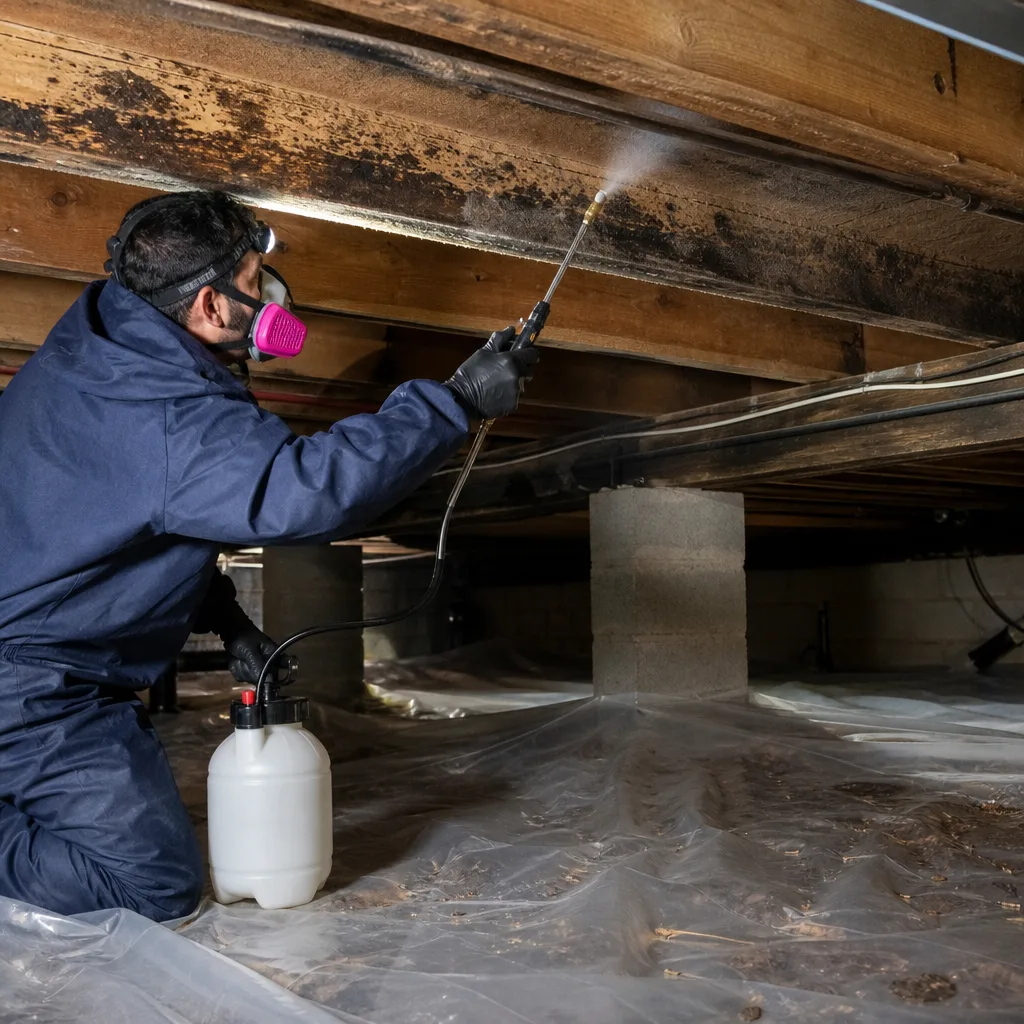
Air Quality Restoration
After the contaminated material is removed and the structure is dry, we scrub the air. HEPA-filtered air scrubbers run continuously during and after remediation, pulling spores out of the room so the space is safe for your family, your pets, and your neighbors. In dense New York housing, this step is not optional. A through-wall spore migration in a prewar building creates problems for everyone on the floor.
What happens when you call
- 1
A real person answersNo phone trees - you reach a local pro.
- 2
You get an upfront price rangeHonest numbers before anyone is dispatched.
- 3
A background-checked tech heads outLicensed & insured, dispatched right away.
- 4
You approve before work beginsNothing starts until you say go.
Trusted Brands We Service in New York
We stock parts and equipment for the restoration brands New York homeowners and property managers already know. Our crews run B-Air air movers and Injectidry drying systems on a daily basis, paired with IICRC-standard containment protocols. Because we operate locally in New York, we don’t wait on a parts shipment from across the country when a dehumidifier filter or a moisture meter probe needs replacing mid-job. We carry what we need, and we service what we install. If you’ve had a previous restoration company walk away from a Dri-Eaz unit that wasn’t performing, we can assess and address it on our next visit.
See the difference
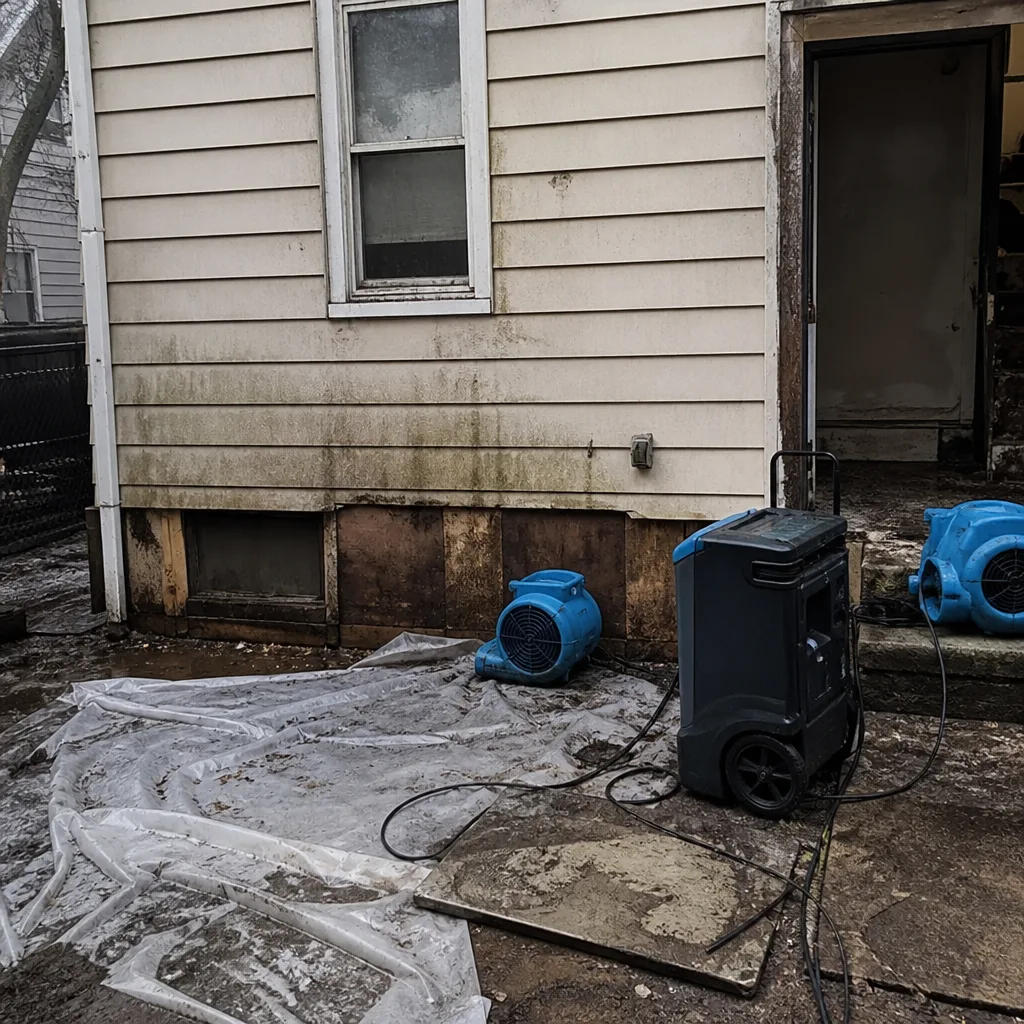 Before
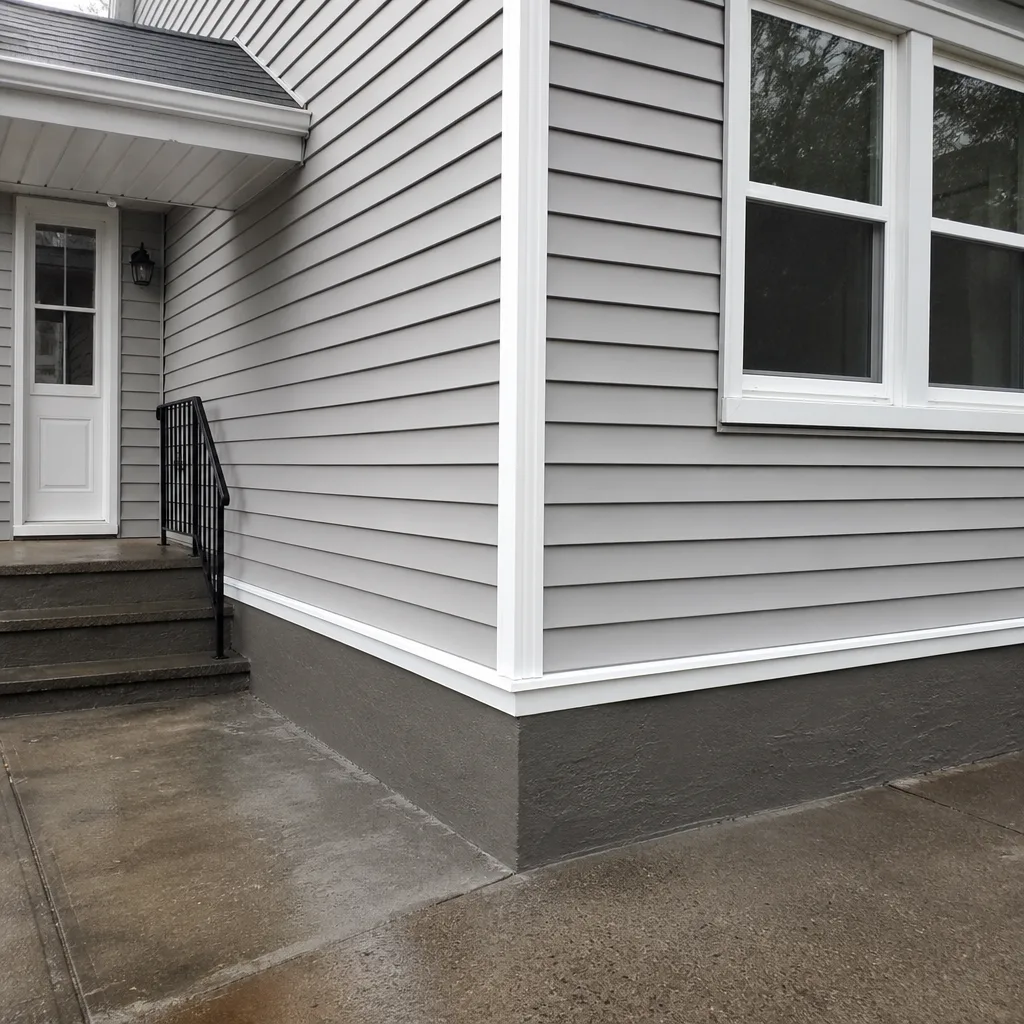 After
After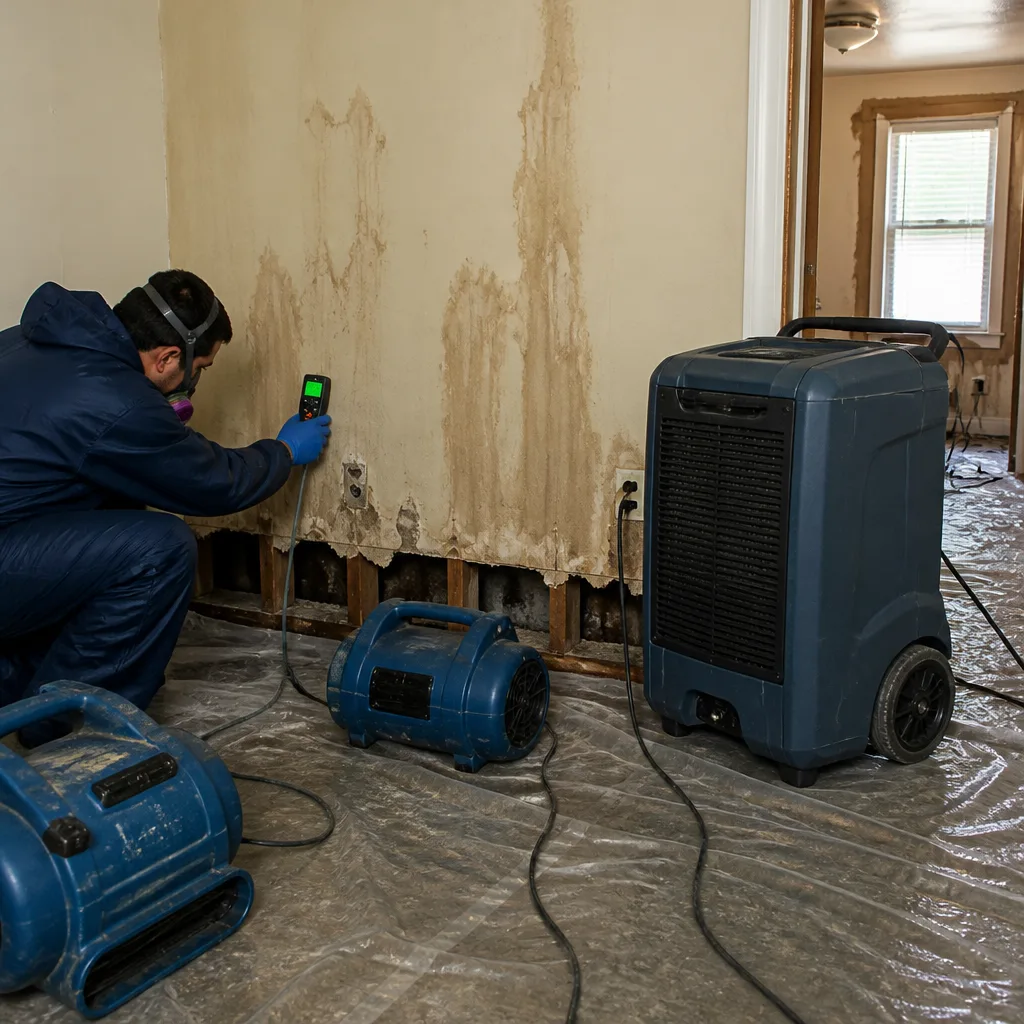 Before
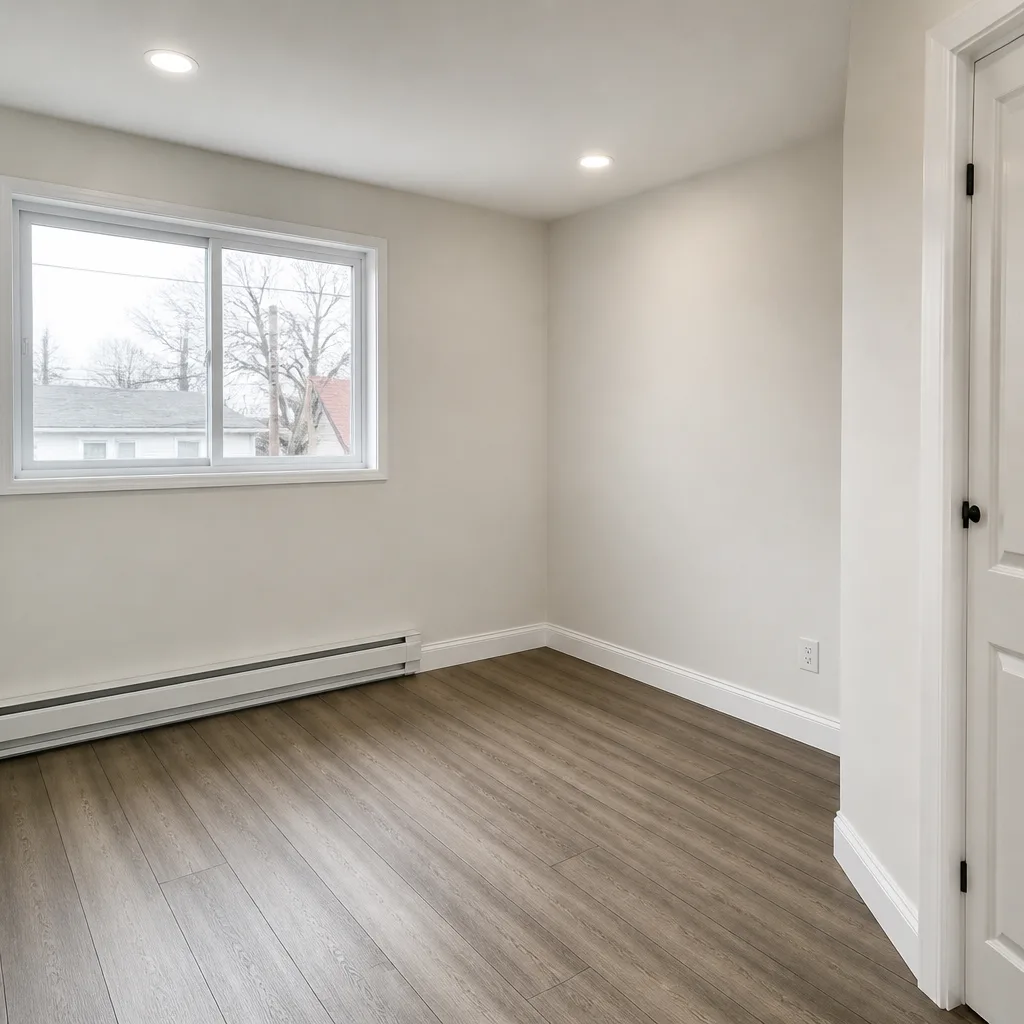 After
After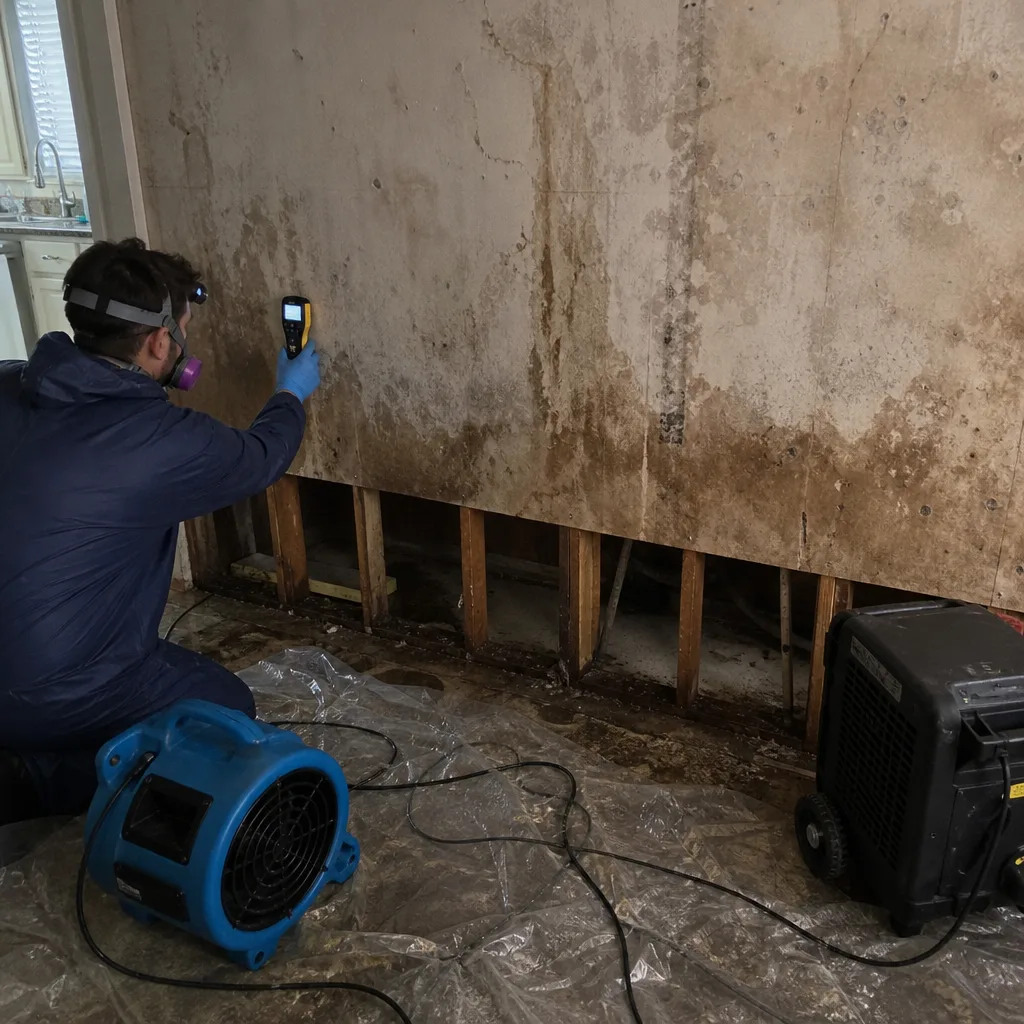 Before
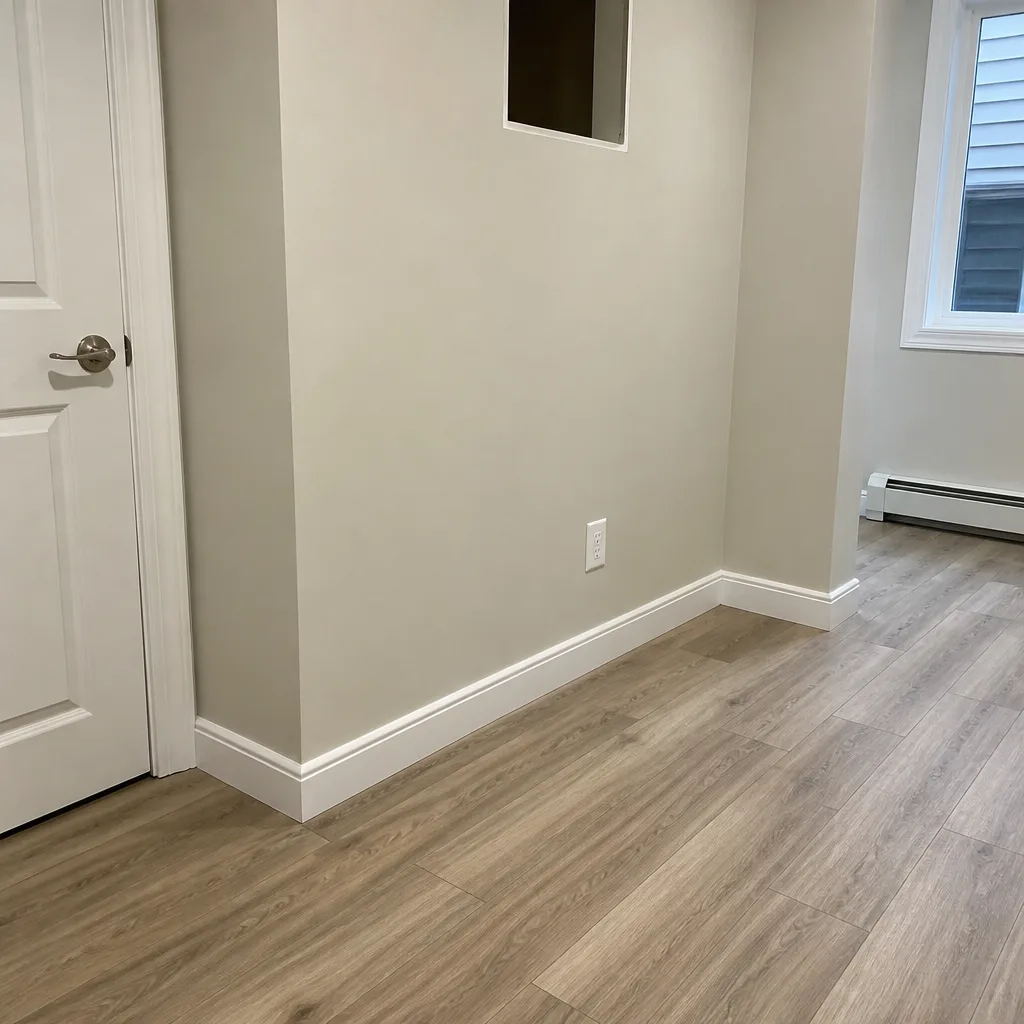 After
AfterCommon Mold Remediation Problems We See in New York Homes
- Combined sewer backups in prewar basements. The combined sewer system in New York sends stormwater and sewage through the same pipes, and heavy rain overwhelms them. Water pushes back up through basement floor drains in brownstones and tenements, and within 48 hours, mold is blooming on drywall and wood joists.
- Mold behind uninsulated walls after freeze-thaw cycles. Winter strains aging pipes in New York’s older buildings. When a pipe in an uninsulated exterior wall freezes, thaws, and cracks, water soaks the plaster and lath behind the wall. By the time you see a stain, mold has been growing for weeks.
- Surface-only cleanup that leaves hidden mold. A landlord paints over a mold stain and calls it done. The mold is still in the wall cavity, and it regrows after the next freeze-thaw cycle or humid summer. Our moisture mapping finds what the paint covered.
- Spore migration through shared walls in attached buildings. Brownstones and prewar tenements share structural walls. When mold remediation is done without proper containment, spores travel into neighboring units. Co-op boards in New York take this seriously, and so do we.
Pricing for Mold Remediation in New York, NY
Here’s what New York homeowners can expect to pay in 2026. A small mold issue in a single bathroom or closet runs $1,200 to $2,000. A basement after a sewer backup, with containment, removal of drywall and insulation, structural drying, and air scrubbing, typically runs $3,500 to $6,800. A large multi-room job, like a nor’easter flood that pushed seawater through several rooms in the Rockaways, can run $7,000 to $15,000 or more depending on how many materials need to come out and how long drying takes. Plaster walls and wood lath are labor-intensive to remove, which is why prewar building remediation often costs more than drywall work in newer construction. Every job gets a written price before work starts. Call (607) 600-9946 for a free estimate, and you’ll see the number in writing before anyone picks up a tool.
We Also Serve Cities Near New York
Our crews serve all of New York, plus the surrounding areas where homeowners call us regularly: Astoria, Bayside, Elmont, and Manhasset. If you’re in any of those neighborhoods and dealing with mold, water damage, or fire restoration, the same team and the same written-price promise applies. See our full local service area on the New York page.
Serving New York, NY - Our Local Coverage Area
We’re based in the New York area and know this community well. Use the map below to see our service coverage - if you’re nearby, we can almost certainly help.
FAQs About Mold Remediation in New York
Mold begins forming on drywall and wood within 24 to 48 hours of water exposure, and Category 3 water from a sewer backup accelerates that timeline significantly. In a prewar building with plaster walls and wood lath, the water doesn’t just sit on the surface. It wicks up into walls and soaks into joist cavities. Call us at (607) 600-9946 immediately, even if the water is already gone. The faster we contain and dry, the less material needs to come out.
New York City’s Local Law 55 of 2018 requires mold assessment and remediation performed by a licensed professional in certain residential buildings, particularly after water damage events. Co-op and condo boards often have their own additional documentation requirements. Our team has worked on remediation projects all over New York and is familiar with the paperwork boards expect.
Full containment. Before any contaminated material is disturbed, we seal the affected area with plastic sheeting and run negative air machines that pull air inward and exhaust it through HEPA filters. This prevents airborne spores from moving through shared walls, floor cavities, and hallways. In a brownstone, without containment, cleaning one unit just spreads the problem to the ones beside it.
Yes, and this is where experience matters. Plaster walls often have three coats over wood lath, which means water travels through the keys and soaks into the lath itself. Drywall, by contrast, absorbs water quickly but is easier to remove and replace. Plaster remediation is more labor-intensive and must account for the structural role plaster plays in older New York buildings. Our crews have done both for years, across every borough.
Saltwater flooding is harder on a structure than freshwater. Salt pulls moisture into wood and masonry and holds it there, which extends drying time and increases corrosion on fasteners and electrical components. Things like drywall, insulation, and carpet typically need to come out. Wood joists and framing can sometimes be dried, but they require aggressive dehumidification and careful moisture monitoring. After a nor’easter pushed seawater into a basement on Beach 116th Street in the Rockaways, our crew found mold already blooming on drywall and wood joists within 48 hours. We set up full containment with negative air, removed affected drywall, and used moisture mapping to confirm readings dropped below 15% before applying antimicrobial treatment and structural drying with Dri-Eaz dehumidifiers. Call (607) 600-9946, and we’ll assess what can stay and what needs to go.
If you’re dealing with mold in New York, the fastest way to get answers is to call. A live person answers at (607) 600-9946, 24 hours a day, seven days a week. We’ll ask what you’re seeing, help you understand what’s urgent and what can wait, and schedule a crew to assess the damage. Every job starts with a written estimate, and every job ends with a photo of the clean-up before we leave. That’s the Mold Remediation standard in New York, and it’s the only way we work.
Written by Rick Sumner, Owner at Tidemark Water Damage Queens, serving New York since 2006.